AI in Architectural Visualization: What It Actually Changes (and What It Doesn't)
EOS Visions · April 2026 · 7 min read
Quick Answer
AI accelerates roughly 20–35% of the architectural visualization workflow, primarily in concept ideation, design variations, and material asset generation. It does not replace the precision, architectural integrity, or revision control required for client-ready deliverables. Architectural rendering studios who combine strategic AI use with core 3D craft create better imagery for clients.
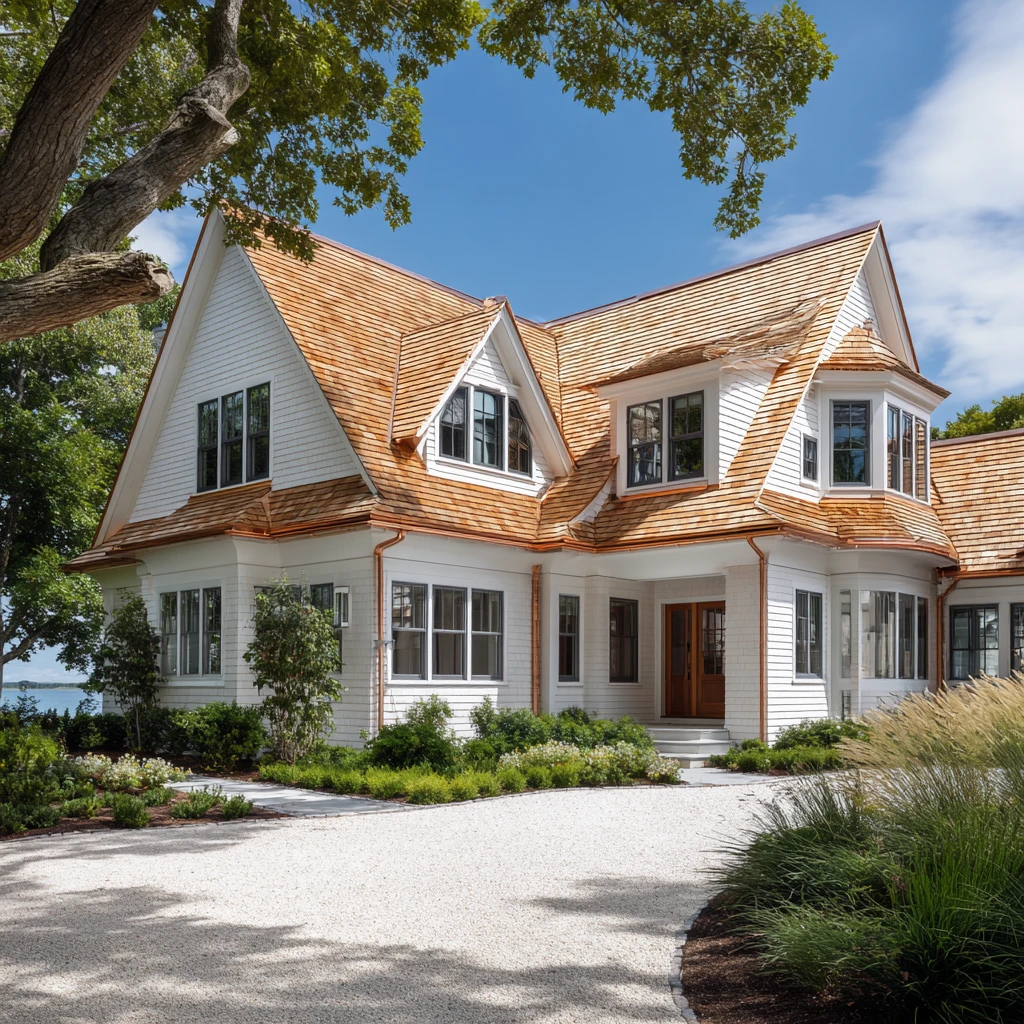
A generated image. It looks great, but falls apart when looking at the details.
You've probably heard that AI is about to replace architectural visualization entirely, and the claims are warranted. The tools are real, the efficiency gains are real, and the hype around them is warranted.
Here's what the data shows: according to Chaos Group's 2025 State of Archviz Report, only 11% of firms currently integrate AI into their visualization pipelines. Among those that do, 85% report efficiency gains - but almost exclusively in early-stage ideation and asset generation, not in final deliverables. AI is accelerating a specific slice of the work. The remaining 65–80% still requires human judgment, geometric precision, and craft.
This post breaks down exactly where AI helps, where it falls short, and what it means for developers, architects, and designers commissioning visualization work.
What is Architectural Rendering For?
To get a better understanding of where AI can help us, and where the hype is unjustified - we need to remind ourselves the reasons and use cases of architectural renderings in the first place.
Renderings are almost always client-facing. Developers use architectural renderings to pre-sell units, architects use them to win pitches and align with clients before construction begins, interior designers use them to interface with the client and iterate designs.
All of these cases require technical precision and architectural accuracy, and if the end-client notices inaccuracies in their architecture and interior designs their trust in you may be eroded.
Does AI Actually Save Time in Architectural Visualization?
Yes - within a narrow band of tasks.
Chaos Group's 2025 State of Archviz Report found that 44% of firms use AI for concept generation, 35% for design variations, and 32% for photorealism enhancement. In these categories, the time savings are real and documented. Feasibility studies that previously took days and weeks now take hours in AI-augmented workflows.
But those gains are confined to the early, exploratory stages of concept ideation and for enhancement in post-production. The real substance of architectural rendering - modeling the architecture correctly, recreating accurate lighting conditions, crafting materials that are accurate to the design, coordinating with architects and marketing managers to make sure the images are representing the project accurately, these are still the responsibilities of an architectural rendering studio.
What Does AI Handle Well — and Where Does It Break Down?
AI tools are strongest at speed, not precision.
For rapid concept exploration, material generation, and design variation, AI meaningfully compresses the timeline. The breakdowns come at geometric precision. AI-generated architectural imagery frequently contains structural violations that no human architect would approve: windows at inconsistent intervals, balconies that defy load-bearing logic, material transitions that make no structural sense.
These aren't minor artifacts. To a developer or architect who show these images to their client, they're credibility problems.

A guaranteed 10-day turnaround on a geometrically accurate render is more valuable to a client than a same-day AI delivery that transforms your architecture in unpredictable ways.
Can AI Generate Client-Ready Renderings?
Not without substantial human review and correction.
This is the gap between the hype and the practice. Clients consistently prefer hybrid workflows - traditional 3D modeling for precision, AI assistance for speed in concept phases, even when pure AI delivery initially costs less. The reason: predictability.
The market is recalibrating toward this reality. According to Gartner's 2025 Hype Cycle, generative AI broadly is entering the "Trough of Disillusionment," with organizations averaging $1.9 million in annual AI spend but fewer than 30% of AI leaders reporting CEO satisfaction with ROI. Archviz follows the same pattern: early excitement, now pragmatism.
For client-facing and sales-ready materials, precision is still the baseline requirement.
Will AI Replace Architectural Visualization Artists?
No, but the role is evolving.
The shift is from "pure production" roles to hybrid roles that require both strategic interpretation and technical execution. Artists who can decide when to use AI, which outputs are worth keeping, and how to correct geometric or material errors are more valuable now than artists who execute predefined production tasks at speed.
According to analysis from Ravelin3D, studios are not cutting headcount. They're changing what they hire for. The emerging standard is the "hybrid archviz artist" - someone who maintains core skills in 3D modeling and lighting while deploying AI strategically for ideation phases. This bifurcation is accelerating. Artists who adapt early have a significant advantage.
How Does EOS Visions Use AI in It's Practice?
AI is invaluable when used correctly.
Rendering studios often search for reference imagery of the relevant project for hours before applying materials and tweaking lighting. And even then, the result might not be satisfactory, since the materials were sourced from one image, the grass from another, the lighting from another, etc.
Using AI, we can now explore dozens of variations of lighting scenarios, and see how it impacts the vegetation and lighting contrasts between materials holistically, in one image. After deciding on a reference image, we dial in the materials in the 3D scene and recreate the material contrasts and lighting setup.
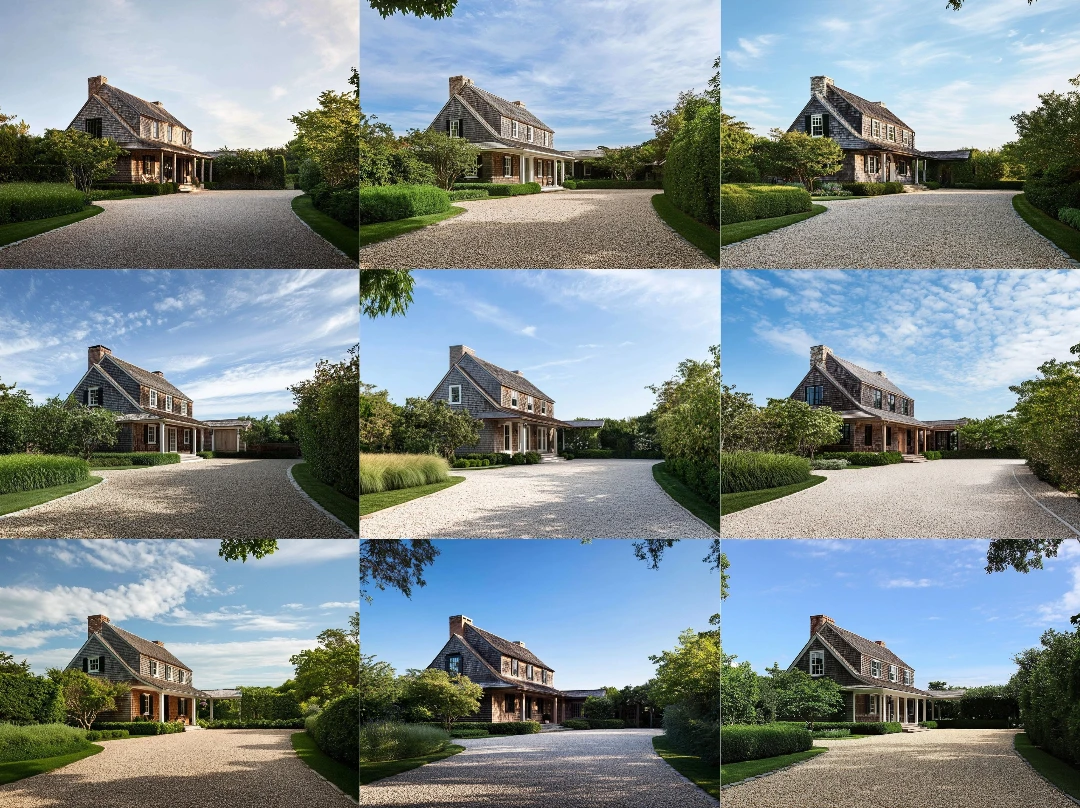
Generated images to be used as references for a project in Cape Cod. Invaluable for exploring beautiful material contrasts and vegetation + lighting setups.
Using AI in this manner we get the best of both worlds - we harness the speed from AI and maintain the architectural integrity of the project.
The Bottom Line
AI accelerates 20–35% of the archviz workflow. It compresses concept ideation, materials generation, and testing lighting setups. It does not replace geometric precision, structural credibility, or the judgment required to produce work that holds up in front of stakeholders, clients, and buyers.
Studios that treat AI as a workflow enhancer, not a production shortcut, deliver faster without compromising quality.
If you're curious to try and see how this applies to your situation, feel free to reach out. We're always happy to share info on how to create great imagery for architects and designers.