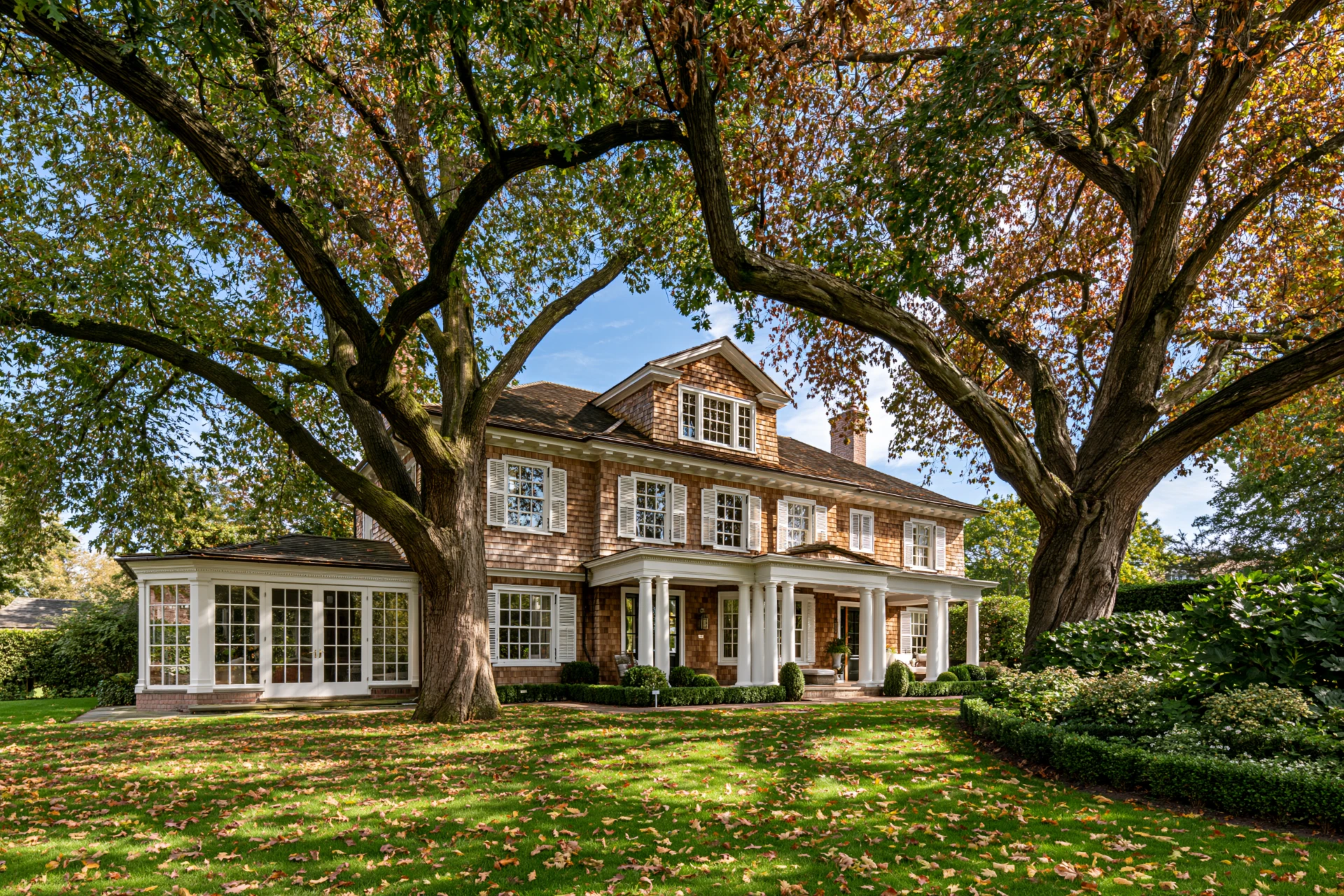
Architectural Rendering in the Hamptons
EOS Visions · April 2026 · 8 min read
Quick Takeaway
With Q4 2025 median sale prices hitting a record $2.34M and luxury closings over $10M up 75% year over year, cinematic-grade visualization has become the baseline expectation for serious spec and custom projects. Anything less reads as underprepared.
There are three things to look out for when rendering architecture in the Hamptons: lighting and atmosphere, vegetation, and material authenticity. If the vegetation is off, if the cedar shingles silver too uniformly, and if the sky carries Mediterranean clarity instead of that Atlantic haze, you're not giving the local beauty its due respect and you lose the specific character of the place.
Is it Worth Investing in Renderings?
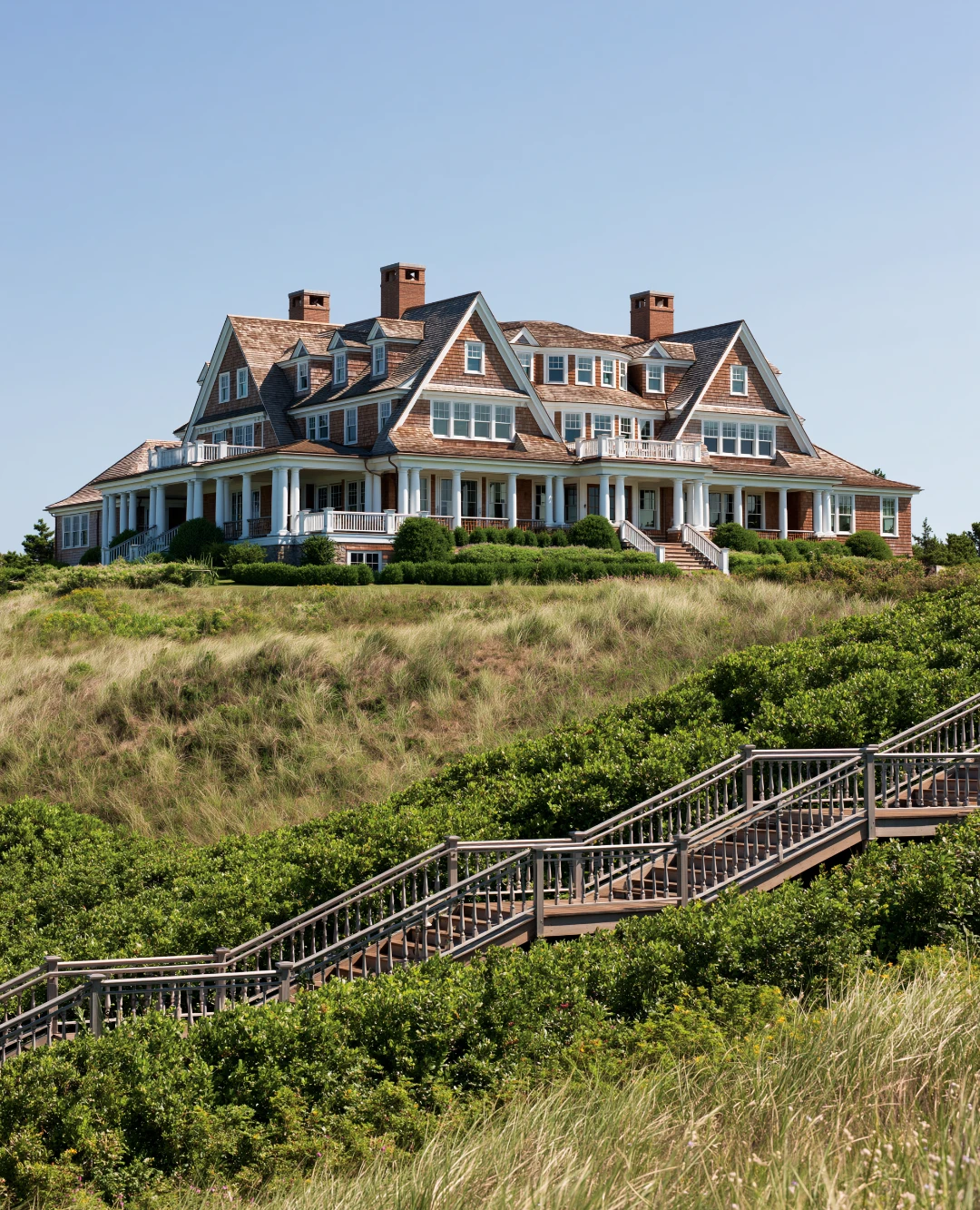
A documented Hamptons example: 332 Parsonage Lane in Sagaponack pre-sold near its $29.5M asking using rendered visualizations as the primary pre-construction marketing asset. The buyer committed before the house existed in physical form!
If you're a developer or architect weighing whether to commission renders for a Hamptons project, the real question isn't whether visualization pays back. It's what quality earns its place in front of an ultra-high-net-worth buyer.
What Types of Renderings Do I Need?
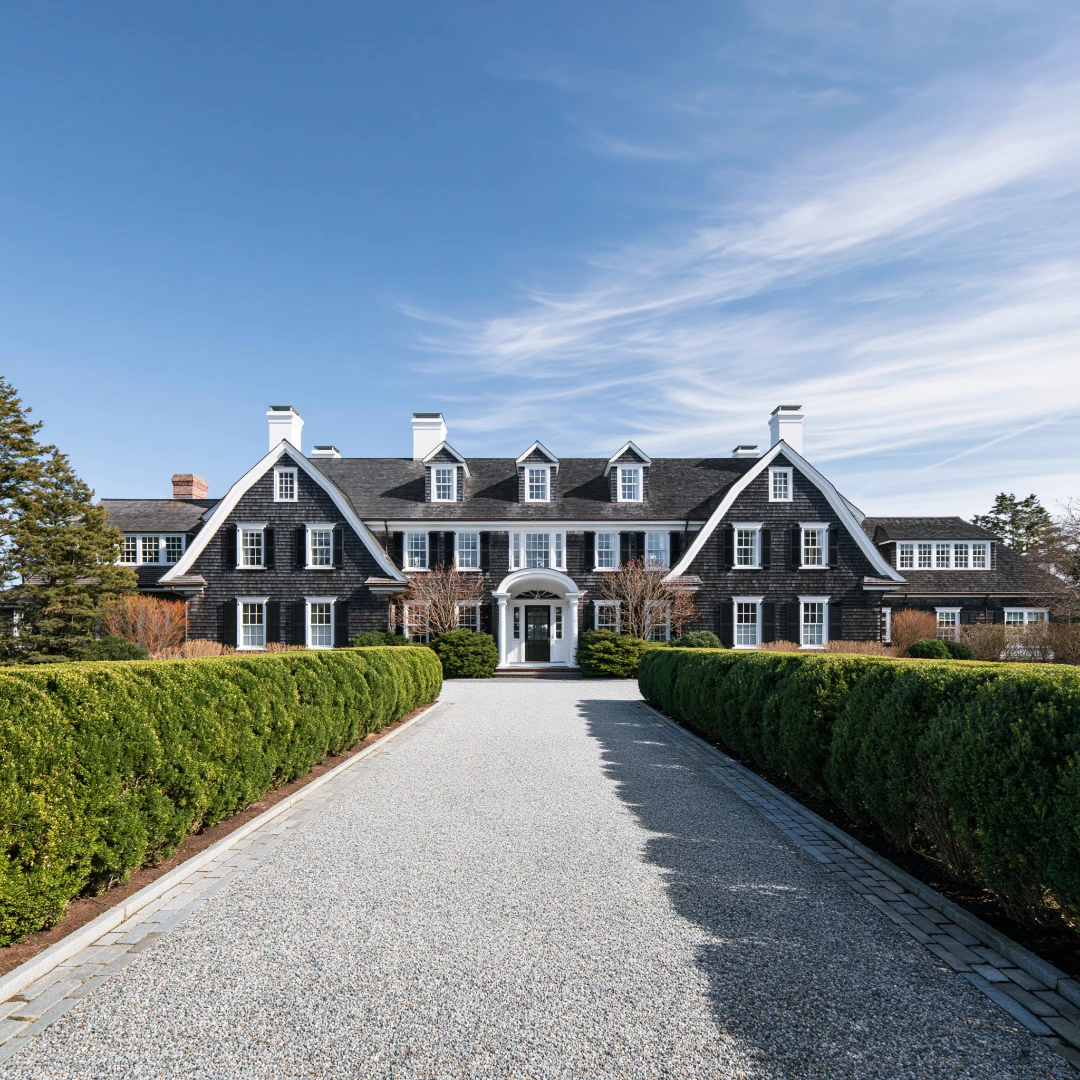
Renderings roughly break into two categories - renderings for designing, and renderings for marketing and selling.
If you're looking to streamline and improve client communication and feedback - you need design-oriented renderings. These renderings are used as a design tool to iterate upon designs and show multiple variations of the architecture and interior spaces.
If you're looking to land a client, sell land, or sell a development project - you need marketing renderings. Marketing renderings are more detailed and higher quality, built for the scrutiny of a luxury buyer or investor.
We have a separate article covering the different deliverables and pricing in detail. Here's a quick breakdown of what we recommend for each purpose.
Type of Deliverable
Best For
Still Rendering
Design + Marketing
Cinematic Animation
Marketing
3D Tours
Marketing
Now that we have that covered, let's take a look at what it takes to make an image look like it's from the Hamptons.
The Lighting
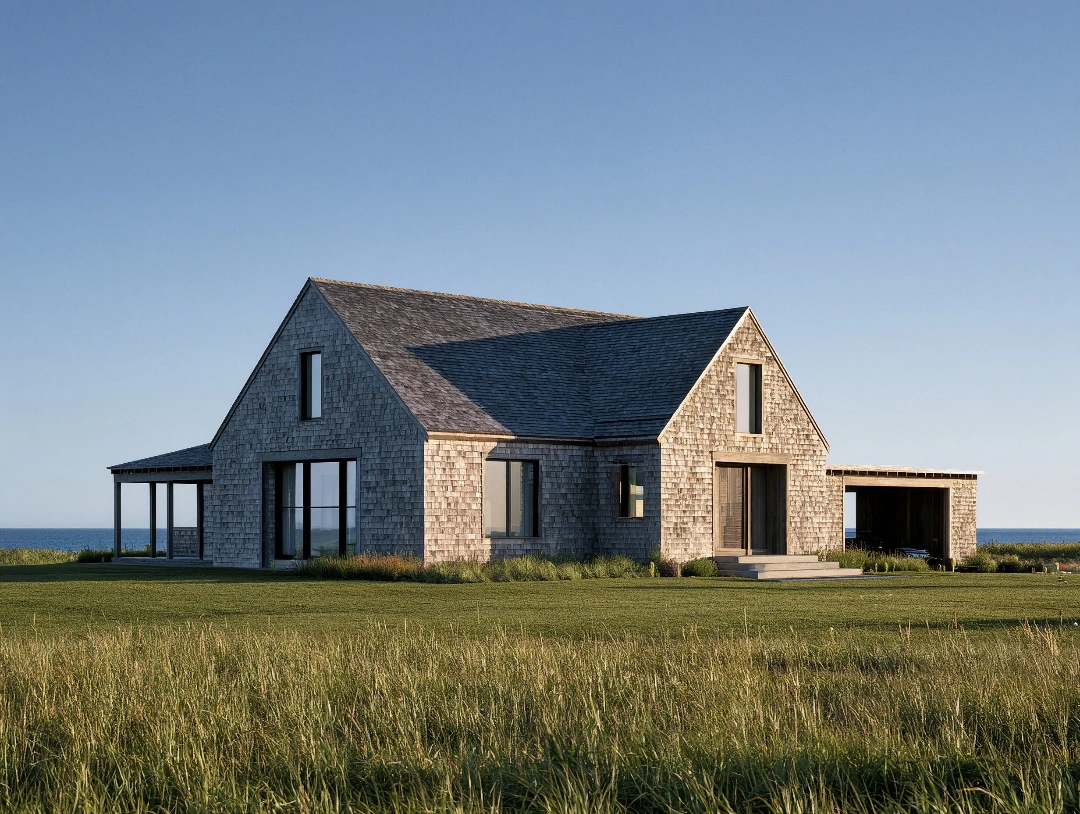
The South Fork sits at roughly 41 degrees north latitude. That's nearly the same as Naples and Madrid. But it's important that the atmosphere reads as Atlantic, not Mediterranean.
In summer, the sun's peak angle is approximately 72.5°. High enough that midday shadows shorten dramatically, but never the overhead-noon look you get in the tropics.
In the winter, the sun's peak angle is approximately 25.6°. Long, low, raking light across cedar shake facades is one of the signature winter looks of the South Fork.
Our Advice
Pick a time of day that does the most for the architecture. Light one façade and let the others fall into shade, that's what creates depth. Cedar shingles in raking light reveal their geometry; flat noon light flattens them into a single tone.
Local vegetation and landscape
California privet (Ligustrum ovalifolium). The hedge species. Many estates have a privet hedge somewhere on the property. Suitable for privacy hedges as they grow rapidly, and can easily grow to 8-12 ft tall.
Hydrangea macrophylla in mophead form. The blue hydrangea is iconic, and the blue color comes from the local acidic soil.
Boxwood (Buxus sempervirens). For parterres and entry-court geometry, not for property-line hedges. Different role than privet. More ornamental.
Pitch pine (Pinus rigida) and scrub oak (Quercus ilicifolia). The Pine Barrens vegetation defines the wooded interior of the South Fork.
Beach plum (Prunus maritima) and bayberry (Myrica pensylvanica). Coastal scrub, especially near dunes.
American beach grass (Ammophila breviligulata). Dune-line only. Not generally used inland.
American holly (Ilex opaca) and Eastern red cedar (Juniperus virginiana). Native evergreens, common in mixed plantings.
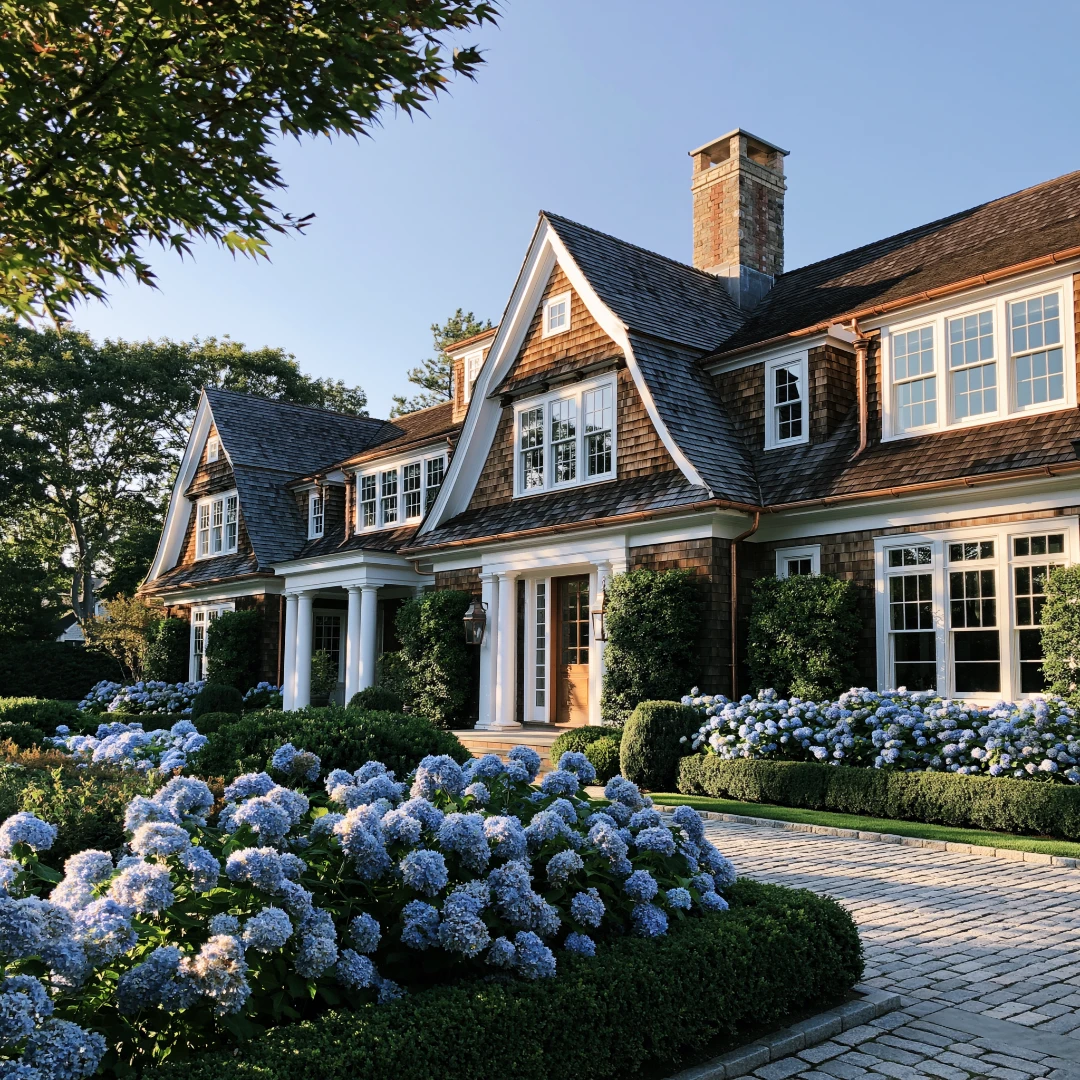
Never include palm trees of any species, olive trees, bougainvillea or other Mediterranean staples, saguaro or other arid-climate cacti.
Hardscape. Pennsylvania bluestone in thermal finish or natural cleft is the standard for patios, pool surrounds, and walkways. Pea gravel and crushed clamshell are typical for driveways, especially on older estates.
The Materials
Cedar dominates, but the cedar story is more layered than generic libraries assume. Getting the cedar right - along with brick and gutter details - is where most renders fall short.
Cedar shingles. Eastern white cedar (Thuja occidentalis) is the historic species. Alaskan yellow cedar (Cupressus nootkatensis) silvers faster and more uniformly and appears on tighter-grain custom work. The standard reveal is 5 inches.
Cedar plank siding. A separate vocabulary from shingles, used primarily on contemporary barn projects. Typical sizes are 1x6 or 1x8 boards, often shiplap or vertical batten. Western red cedar is the most common species for plank work because of available length.
Brick. Less dominant than cedar but present in three contexts. Historic stock in Sag Harbor and East Hampton Village uses Federal-era red brick, hand-made and irregular. Chimneys on shingle-style houses are typically red brick or whitewashed brick. Contemporary projects increasingly specify long, thin Danish brick like Petersen Tegl Kolumba in earthy whites, grays, or burnt finishes.
Gutters and downspouts. The high-end traditional standard is half-round copper hung on period-appropriate brackets, with round copper downspouts. Box gutters concealed within the eave appear on the highest tier of custom work. K-style aluminum painted to match the trim is the spec-builder default and reads as catalog. Modern barn and contemporary projects use dark bronze or matte black aluminum, often with hidden box gutters or scuppers. Copper patina follows a known timeline: bright penny in year 1, brown oxidation through year 5, blue-green developing by year 10 to 15.
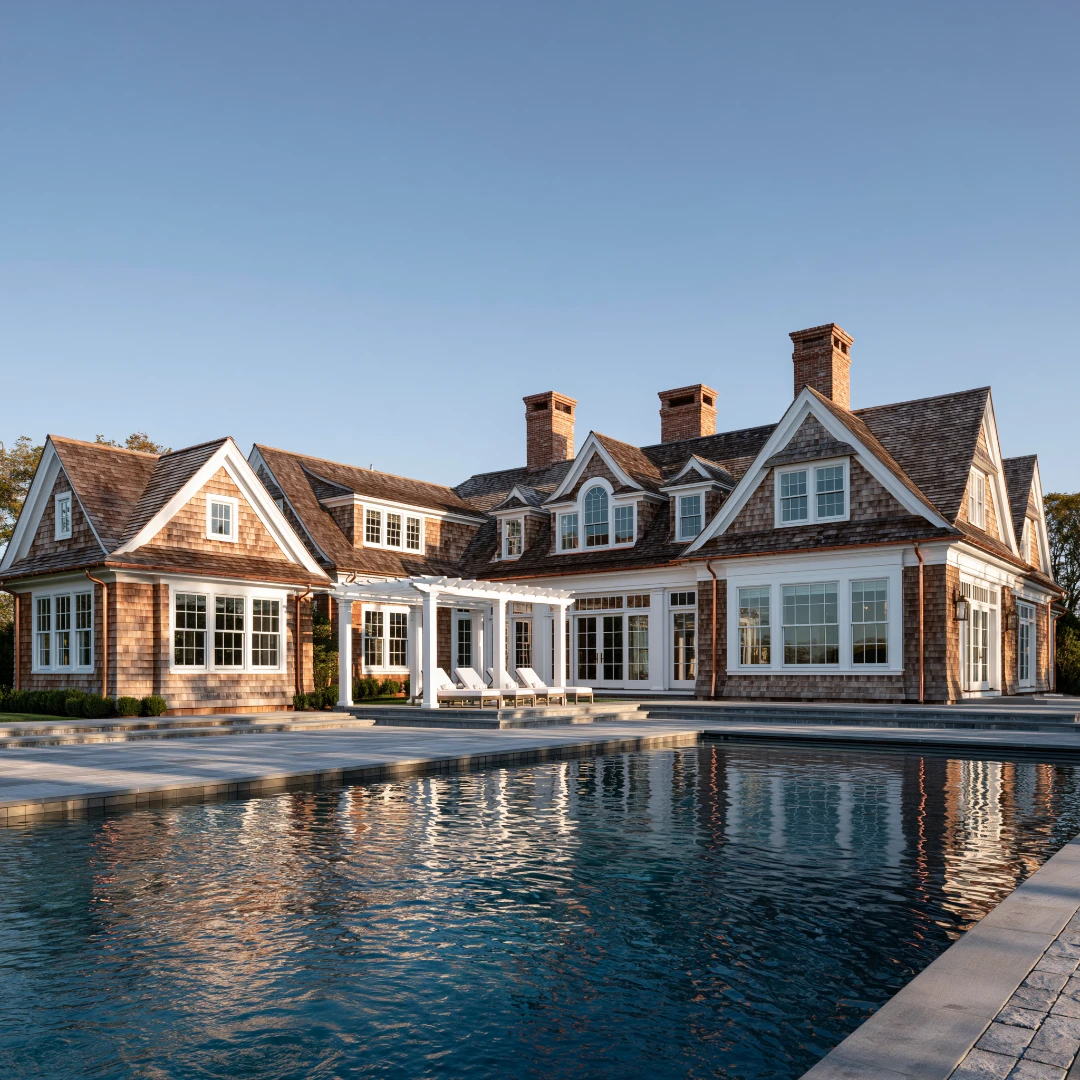
Get these details right, and the render will read authentically local.
Frequently asked questions
Everything you need to know about renderings for the Hamptons.
If you're not looking to maximize lot value, or improve client communication and heighten your perceived value (and in turn, increase your professional fees), you can skip.
Yes, we work from your architectural drawings, CAD files, 3D models, and even hand drawings. We match your specified materials and finishes precisely. Accuracy is what separates a useful render from a generic one. Clients have noted that finished construction closely matches what was rendered.
At minimum: architectural drawings or a 3D model, site photos or drone footage, your target materials and finishes, and the project region so sun position can be set accurately.
Typically 2 to 4 weeks from a complete brief to final delivery for a project containing 4-8 images. Rush timelines are available.
For residential projects, still renders typically run between $500 and $2,500 per image depending on complexity, number of views, and turnaround time. Commercial and mixed-use projects generally start around $1,500 per still. Animation starts around $50 to $150 per second. For a full breakdown of what drives archviz pricing, see our 2026 pricing guide.
AI tools can generate images quickly, which makes them useful for early design exploration and client mood-boarding. For anything that needs to hold up to scrutiny - they fall short. For a detailed look at where AI fits in the archviz workflow, read AI in architectural visualization: what it changes.
Working on a Project?
We've rendered residential projects along the Northeast coast, including the Outer Cape - a region that shares much of the same architectural vocabulary. If you have a project in development and would like some insights on creating renderings for it, send us your brief. We'll come back within 24 hours, no commitment required.